
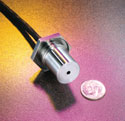
 Boston—Danfoss Compressors is using a Cambridge Viscosity small sample viscometer to test refrigerant and oil mixtures at their Tianjin, China factory.
The viscometer includes the Cambridge VISCOpro2000 electronics and SPL 571 lube oil viscometer sensor with multiple piston ranges to test compressor performance using new combinations of lube oils and refrigerants. The lower the viscosity of this mixture, the more efficient the compressor is. However, if viscosity is too low, the compressor can wear out prematurely. By achieving the optimal balance of efficiency and lubricity, the company can improve compressor performance while using more environmentally friendly refrigerants.
Danfoss engineers cite the viscometers’ ease-of-use, robust functionality and high degree of accuracy among the chief reasons for their use. The VISCOpro2000 enables users to monitor critical fluid processes and capture real-time data. The addition of the 571 sensor—used extensively for compressor, used oil analysis, on-engine and hydraulic fluid applications—provides for installations where form factor and small sample volume are important. “Danfoss was restricted in the amount of area they had, and Cambridge’s miniature lube oil viscometer is the perfect choice when limited to tight spaces,” explains Cambridge Viscosity China Agent Miker Wang of Suzhou TAIEN.
Cambridge’s viscosity management technology is based upon a simple and reliable electromagnetic concept. Two coils move the piston back and forth magnetically at a constant force. Proprietary circuitry analyzes the piston’s two-way travel time to measure absolute viscosity. A built-in temperature detector (RTD) senses the actual temperature in the sampling chamber. Constant in and out motion keeps samples fresh, mechanically scrubs the sampling area and provides excellent viscosity tracking.

About Cambridge Viscosity
Cambridge Viscosity, a leader in small sample viscometer systems for laboratory and process environments, designs automated viscometers used worldwide in petroleum, exploration and refining applications to ensure accurate viscosity in both lab and operations. Cambridge’s worldwide reach is important for providing application engineering support and service wherever and whenever needed.
Cambridge Viscosity’s sensors and viscometer systems conform to ASTM, DIN, JIS and ISO standards, with a range of models designed to meet specific industry and application needs.


